
-
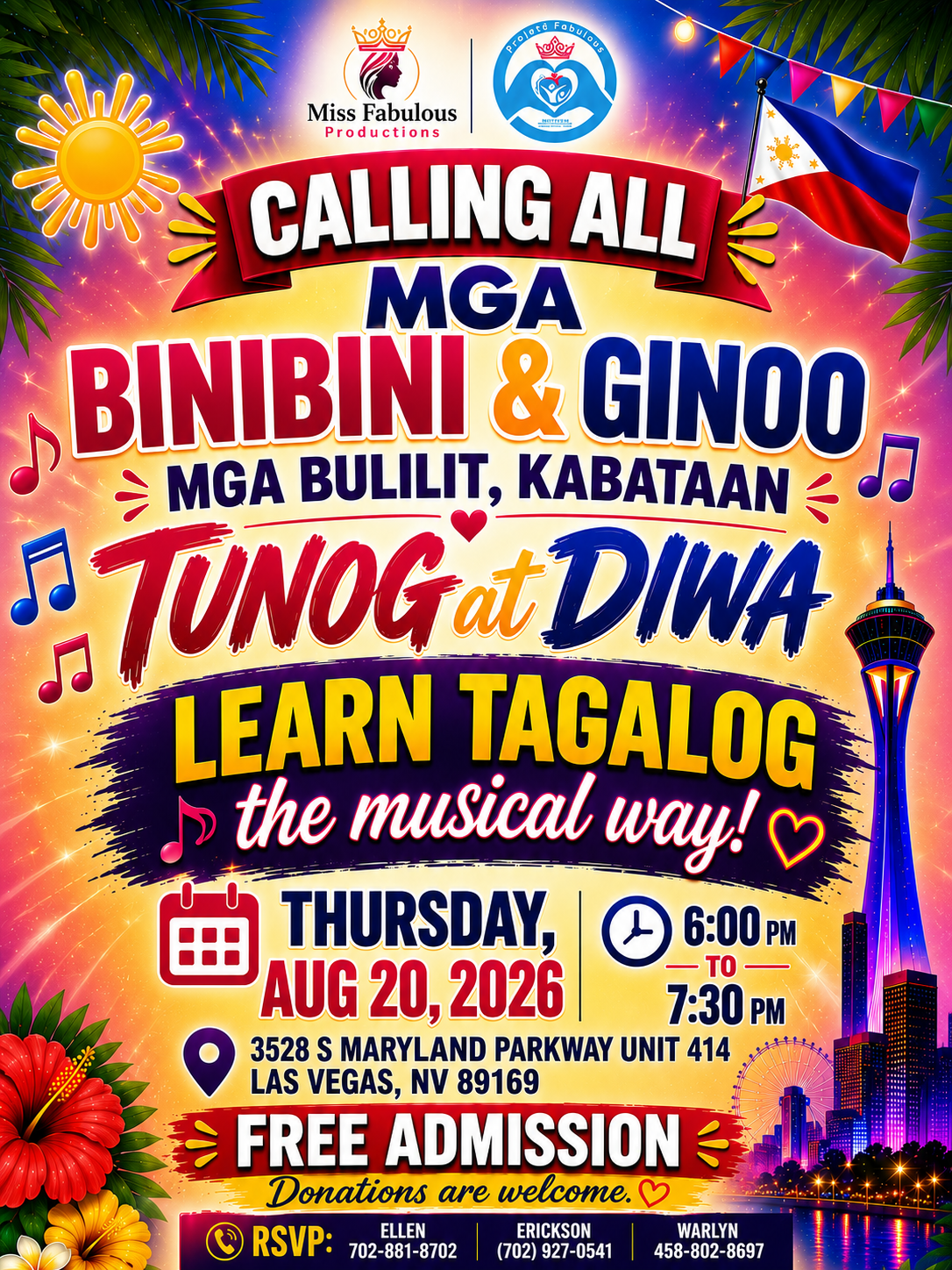
Tunog at Diwa is a community-based Filipino music and culture experience centered on participation, not performance.
Each gathering blends group singing with light cultural and language exposure, allowing participants to experience Filipino music in an interactive and accessible way. Songs are used as an entry point to introduce Tagalog words, cultural context, and shared understanding, without requiring memorization or formal study.
The environment is intentionally low-pressure. There are no auditions, no expectations of skill level, and no requirement to speak any Filipino Languages. Participants are encouraged to engage at their own comfort level, whether that means actively singing or simply observing and listening.
Tunog at Diwa prioritizes connection, cultural appreciation, and musical expression over technical training or structured curriculum.
-
Tunog at Diwa is guided by a small set of core principles:
Accessibility
Music and culture should be open to everyone. No prior experience in singing or language is required to participate. No cost to attend.Cultural Respect
Filipino music and traditions are shared with care, with the intention of honoring their origins while making them approachable to a broader audience.Community
The experience is built around shared participation. The goal is to create a space where people feel comfortable engaging, connecting, and returning.Low Pressure Environment
There is no expectation to perform, be fluent, or “get it right.” Participants are free to explore at their own pace.Curiosity Over Perfection
The focus is on exploration and learning through experience, rather than achieving a specific outcome. -
Tunog at Diwa was created to provide a space where people can reconnect with Filipino music and culture in a way that feels approachable and inclusive.
Many Filipinos outside the Philippines have some level of distance from the language or cultural traditions. At the same time, others outside the culture may be interested but unsure where to begin. Tunog at Diwa was designed to bridge that gap through music.
By using singing as a shared activity, the experience removes many of the barriers typically associated with language learning or cultural education. Instead of formal instruction, participants engage with the material through listening, repetition, and group participation.
Tunog at Diwa is facilitated by Erickson Franco, a vocal coach and music educator focused on creating community-centered musical experiences. The intention is to create an environment where people can explore, participate, and connect without pressure, while gaining a deeper appreciation for Filipino music and culture.
-
Tunog at Diwa is free to attend.
Donations are welcome but not required. Contributions help support event costs and allow Tunog at Diwa to continue offering community-based Filipino music and culture experiences.
Participants are welcome to join regardless of whether they choose to donate.
If you enjoy the experience, feel free to take photos or videos and share them on social media—tagging EricksonFranco or EricksonFrancoMusic is a simple way to support the community and help it grow.
-